
Learning games / Science Games for Kids
Science games for kids
Drop a pumpkin in a tank, make rain inside a sealed jar, mix paints to change a chameleon's color and keep a rock pool in balance. In every one of these games kids guess first, then find out, just like real scientists.
Science games
Predict, test and explain · 4 games
Coding and the world
Computer science and geography · 2 games
Science is a habit, not a list of facts
The heart of elementary science is a simple loop: make a guess, test it, and explain what happened. Our science games are built around that loop. Before anything happens, kids pick what they think will happen. A wrong guess isn't a mistake, it's a surprise, and the game shows why. Surprises are how scientists learn.
Which game practices what
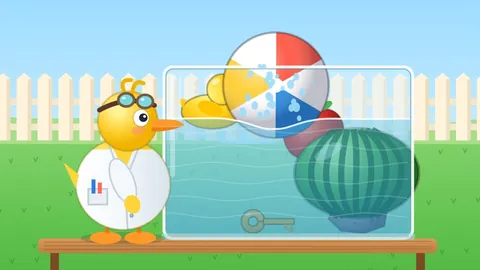
- Sink or Float Lab (ages 5 to 9): predict and drop everyday objects in water, then learn why things float: air inside, shape, salt water and being heavy for your size.
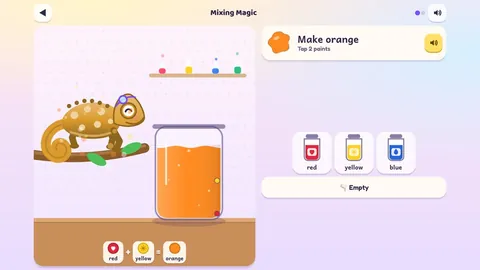
- Color Mix Lab (ages 4 to 8): primary and secondary colors, tints and shades, warm and cool colors, and how mixing light is different from mixing paint.
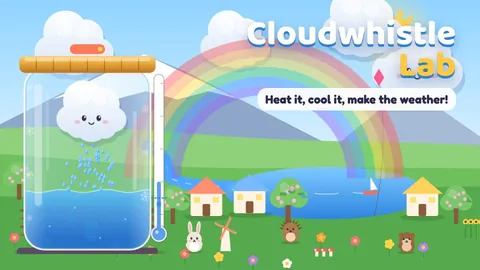
- Cloudwhistle Lab (ages 6 to 10): heat, cool and blow wind on a sealed sky jar to melt ice, make clouds, rain and snow. It covers solids, liquids and gases, evaporation, condensation and the water cycle.
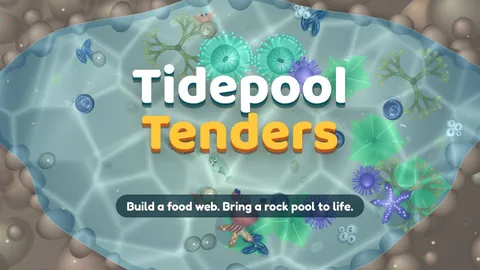
- Tidepool Tenders (ages 8 to 12): stock a rock pool with real tide pool animals and seaweed, draw the food web with arrows that follow the energy, and predict what happens when the balance changes.
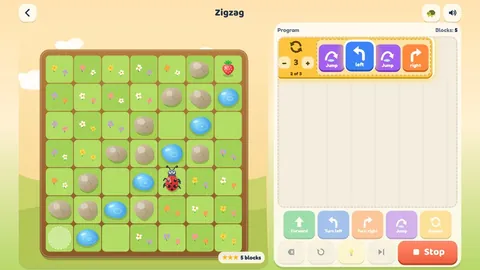
- Code Critter (ages 5 to 10): program a robot beetle with arrow blocks to learn sequencing, debugging, loops and if blocks.
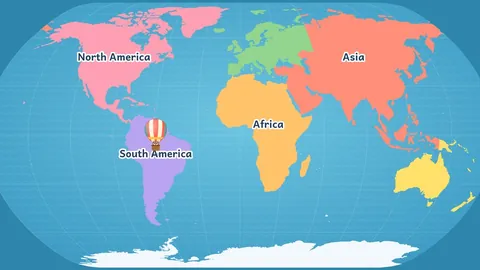
- Atlas Explorer (ages 6 to 11): continents, oceans, US states and capitals and countries on a real map, with fact cards written for kids.
How the games help
Every question and explanation is read aloud, so younger kids can play on their own and older kids can focus on the idea instead of the reading. The science matches what elementary schools teach: states of matter and the water cycle in the early grades, food webs and ecosystems in the upper grades. Tidepool Tenders is a real little simulation, so the numbers your child picks decide what happens in the pool.
Try it at home
- Sink or float tub. Fill a bowl and test fruit, toys and kitchen things. Guess first, every time.
- Rain in a jar. Pour a little hot water in a jar and set a plate of ice on top. Watch the drops form under the plate.
- Paint mixing. Start with red, yellow and blue only, and see how many colors you can make.
- Food chains on a walk. Spot a plant, something that eats it and something that eats that.
No ads, no accounts, no tracking
Our learning games have no ads, no accounts, no chat and no purchases, and they don't use analytics. Progress stays in the browser on your device. For more ways to learn, see our music games for kids or browse all our learning games.
Questions
What science do kids learn in elementary school?
Usually materials and their properties, states of matter, weather and the water cycle, plants and animals, and food chains and ecosystems in the upper grades, along with how to plan a fair test.
Is there a water cycle game for kids?
Yes. In Cloudwhistle Lab kids heat and cool a sealed jar to see evaporation, condensation, rain and snow happen, then send the weather out into a valley.
What age are these science games for?
Ages 4 to 12. Color Mix Lab starts at age 4, and Tidepool Tenders goes up to age 12.
Are these science games free?
Yes. They're free in the browser with no ads, no purchases and nothing to download.
Are they safe for kids?
Yes. No ads, no accounts, no chat and no tracking. Progress is saved only on your device.