
Learning games / 4th Grade Math Games
4th grade math games
Times facts all the way to 12, pizzas that add up to one whole, decimals on a number line and change counted back at a cafe counter. These games practice the core of fourth grade math, with every question read aloud.
Math games for 4th grade
Multiplication, fractions, decimals and money · 5 games
What kids learn in 4th grade math
Fourth grade builds on the facts from third grade. Kids multiply larger numbers, divide with remainders and solve multi step story problems, and quick recall of the times facts (many classes stretch them to 12 x 12) makes all of it easier. They work with place value into the millions and round big numbers.
Fractions get a lot deeper. Fourth graders explain why fractions are equal, compare fractions with different bottom numbers, add and subtract fractions with the same denominator, and multiply a fraction by a whole number. Decimals show up for the first time as tenths and hundredths, tied to fractions like 7/10 and 62/100. Money problems with change are a natural home for all of it.
Which game practices what
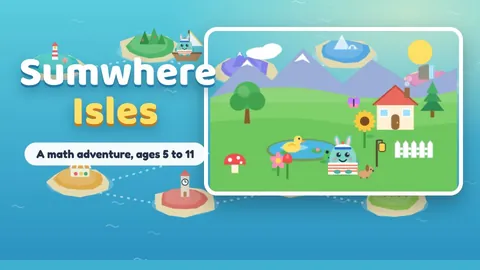
- Sumwhere Isles: Times Table Tundra has times facts to 12 and Fraction Falls has adding and subtracting fractions, with comparing and same amount fractions for review. A grown-up can set the grade, and a short warm-up finds the right starting point.
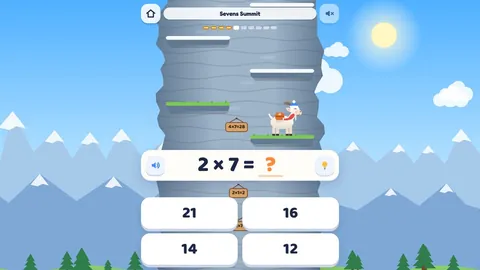
- Multiply Mountain: facts to 10 x 10 extended to 12 x 12, with the break apart strategy for the hard ones and division as the reverse of multiplication.
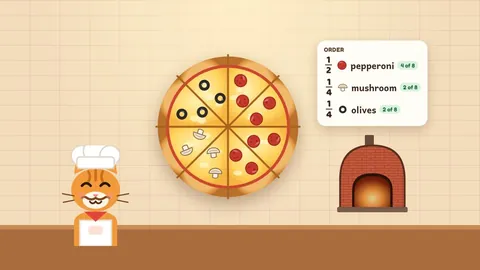
- Fraction Pizzeria: comparing fractions with the same or different top and bottom numbers, equal fractions by re-slicing, and adding fractions with like denominators to fill one pizza.
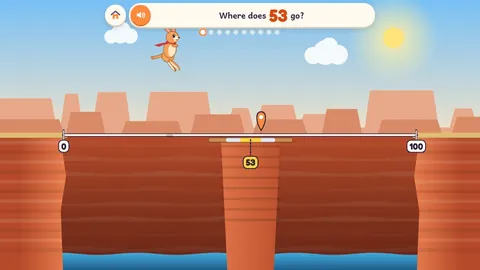
- Number Line Leap: Starlight Ridge places decimals like 0.7 and 0.62 on a number line from 0 to 1, which makes tenths and hundredths something kids can see.
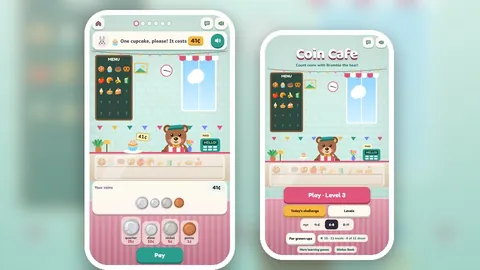
- Coin Cafe: making change from $5 by counting up from the price, the way a cashier does.
How the games help
Questions are read aloud and answers are built with something to touch: fraction bars, pizzas, number lines, coins, arrays. Older kids can also type answers on a number pad in Sumwhere Isles. A miss brings a picture hint and another try, and problems your child struggles with come back again soon. Nothing is timed, and each game moves up or eases back depending on how it's going.
Tips for grown-ups
- Keep the facts warm. A few minutes of times facts a day matters more in fourth grade than any single lesson, because every new topic leans on them.
- Use money for decimals. $0.75 is 75 hundredths of a dollar. Prices are the easiest way into decimals.
- Compare fractions with pictures. Is 3/8 or 1/3 more? Draw both bars the same length and see.
- Estimate first. Before working out 38 x 6, ask "about how much?" It catches silly mistakes.
No ads, no accounts, no tracking
Our learning games have no ads, no accounts, no chat and no purchases, and they don't use analytics. Progress stays in the browser on your device. For review, see 3rd grade math games. For the next step, see 5th grade math games or all our learning games.
Questions
What math do kids learn in 4th grade?
Multi digit multiplication and division with remainders, place value into the millions, equal and compared fractions, adding and subtracting fractions with the same denominator, decimals as tenths and hundredths, and money and measurement word problems.
Should 4th graders know their times tables to 12?
Most schools expect quick recall to 10 x 10 by the end of third grade, and many classes extend it to 12 x 12 in fourth. Multiply Mountain and Sumwhere Isles both go to 12.
Is there a game for decimals?
Yes. Number Line Leap's Starlight Ridge has kids place tenths and hundredths on a number line.
Are these games safe for kids?
Yes. No ads, no accounts, no chat, no purchases and no tracking. Progress stays on your device.
My child is behind in math. Will these games help?
They're built for that. Every game eases back a step after misses, and Sumwhere Isles takes a short side trip to the earlier skill that helps when a child keeps missing the first step of a new one.