
Learning games / Kindergarten Math Games
Kindergarten math games
Counting critters, filling ten frames, finding shapes around town and making 10 on a bridge. These games cover the math most kindergartens teach, read every question aloud and never show an ad.
Math games for kindergarten
Counting, shapes, patterns and early adding · 6 games
What kids learn in kindergarten math
Kindergarten math is mostly about what numbers mean. Kids learn to count objects one at a time and understand that the last number they say tells how many. They count to 100 by ones and tens, write and recognize numbers to 20, and compare two groups to see which has more or fewer. They start adding and taking away within 10, usually with fingers, pictures and objects, and learn the pairs that make 10.
Alongside the numbers come shapes (naming circles, triangles, squares and their 3D cousins, in any size or turn), simple patterns, and comparing things by length or weight. Most US schools follow this order, and our games are built around it.
Which game practices what
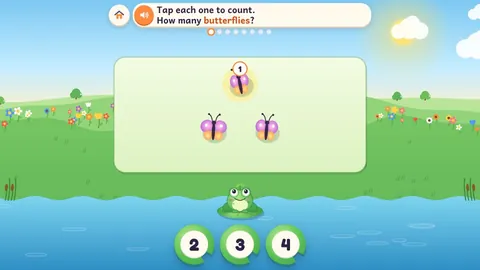
- Count Critters: counting bugs for Mossy the frog, filling ten frames, counting on from a number, counting by tens and comparing groups. It starts with Count to 5 and dot helpers for the youngest players.
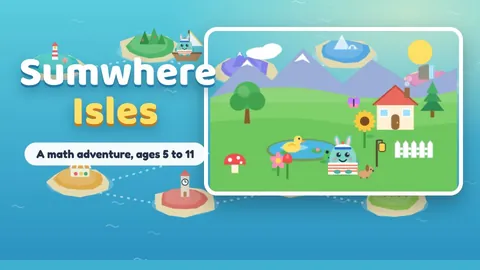
- Sumwhere Isles: on Counting Cove kids count to 20, make numbers on ten frames, find what comes next and pick which is more. Add-and-Take Forest has adding and taking away within 10 and making 10, and Shape Shore and Measurement Meadow cover shape names and longer or shorter.
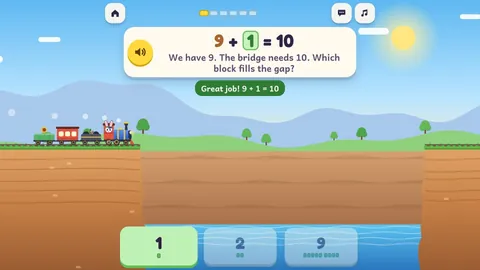
- Bond Bridges: number bonds to 5 and 10 and splitting a number into two parts, the foundation for adding later.
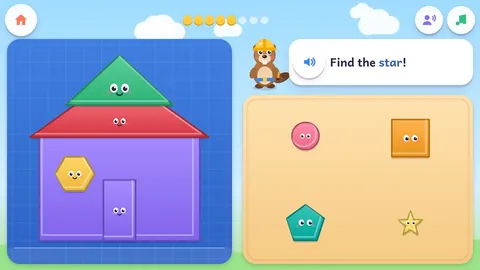
- Shape Town: naming flat and solid shapes in any size or turn, counting sides and corners, and putting small shapes together to make bigger ones.
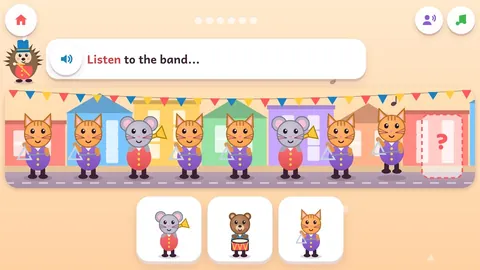
- Pattern Parade: copying and extending patterns like AB, AAB and ABC with an animal marching band, then skip counting by tens.
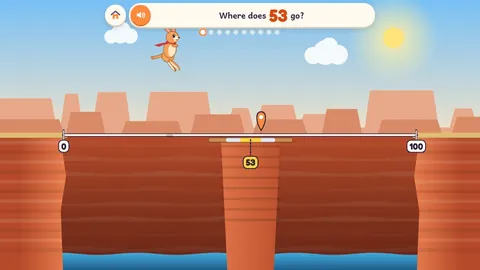
- Number Line Leap: in Pebble Creek kids place numbers from 0 to 10 on a number line, which builds a feel for how big a number is.
Made for kids who can't read yet
Every question is read aloud, with a speaker button to hear it again, so a four or five year old can play without help. Answers are mostly taps and drags on pictures: tap each critter as you count, fill a ten frame, drag a shape where it fits. When a child gets something wrong, they see a hint with a picture and try again, and the game gently brings that kind of problem back until it sticks. Nothing is timed, and there are no lives or fail screens.
Every right answer earns coins that only work inside the game, for decorating Mossy's pond, a little town or an island world. Stickers from any of our learning games collect in one Sticker Book.
Tips for grown-ups
- Short and often. Ten minutes a day beats an hour on Saturday. Most puzzle paths take a minute or two.
- Count real things. Stairs, grapes, socks in the wash. Ask "how many?" and then "how many if we add one more?"
- Make 10 with fingers. Hold up 7 and ask how many more fingers make 10. This one skill makes first grade adding much easier.
- Ask them to explain. "How did you know?" turns a tap into thinking out loud, which is where the learning happens.
- Check the For grown-ups button. Each game shows the skills it covers and what your child is working on.
No ads, no accounts, no tracking
Our learning games have no ads, no accounts, no chat and no purchases, and they don't use analytics. Progress is saved only in the browser on your device. Read the details in our privacy policy, see all our learning games, or move up to 1st grade math games when your child is ready.
Questions
What math should a kindergartner know?
By the end of kindergarten most kids can count to 100 by ones and tens, count a group of up to 20 objects, compare two groups, add and take away within 10, know the pairs that make 10 and name common shapes.
Can my child play without reading?
Yes. Every question is read aloud and most answers are taps on pictures, so pre-readers can play on their own.
Are there ads in these kindergarten math games?
No. Our learning games have no ads, no accounts, no purchases and no tracking.
Which game should a kindergartner start with?
Count Critters for counting, then Sumwhere Isles, which uses a short warm-up to find the right starting point and covers every kindergarten math topic.
Do these games work on a tablet?
Yes. They run in the browser on tablets, phones and computers, with nothing to download or install.