
Learning games / 2nd Grade Math Games
2nd grade math games
Pirate ships loaded with hundreds, a cafe counter full of coins and bills, a clock shop and a goat who climbs a mountain of equal groups. These games cover the math second graders learn, with every question read aloud.
Math games for 2nd grade
Place value, adding to 1000, money and time · 8 games
What kids learn in 2nd grade math
Second grade takes place value up to 1000. Kids learn that 352 is 3 hundreds, 5 tens and 2 ones, skip count by 5s, 10s and 100s, and compare three digit numbers. They add and subtract within 100 fluently and within 1000 using place value, which means getting comfortable with regrouping (trading 10 ones for a ten, or a hundred for 10 tens).
There's also a lot of everyday math. Kids count coins and bills and use the dollar and cent signs, tell time to the nearest five minutes, measure with a ruler and read picture and bar graphs. Equal groups and arrays lay the ground for multiplication in third grade, and shapes get split into halves, thirds and fourths.
Which game practices what
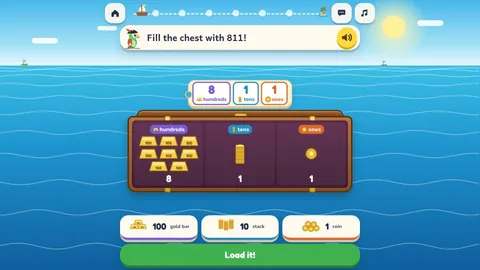
- Place Value Pirates: Hundred Harbor and Trade Winds Reef fit second grade. Kids load coins, stacks of ten and gold bars of 100, skip count by tens and hundreds, and bundle and unbundle to find 100 more or 100 less.
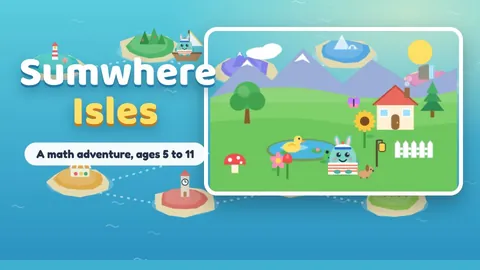
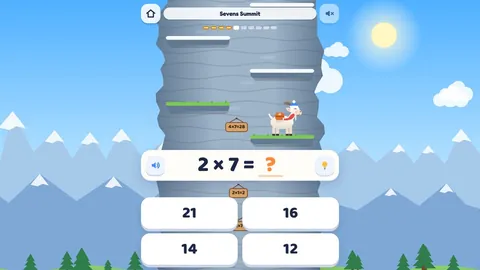
- Sumwhere Isles: Place Value Peaks has hundreds and adding and subtracting within 100 and 1000. Money Market covers paying a price and making change, Measurement Meadow has rulers and bar graphs, and Times Table Tundra starts skip counting and equal groups.
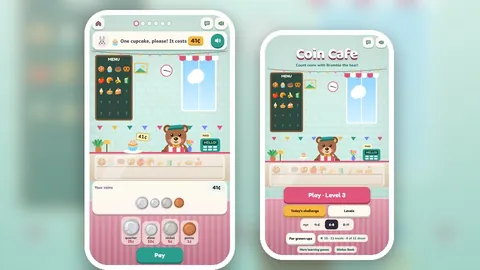
- Coin Cafe: counting coins to 50 cents and then 99 cents, bills and coins together, and paying with the fewest coins at Bramble the bear's snack counter.
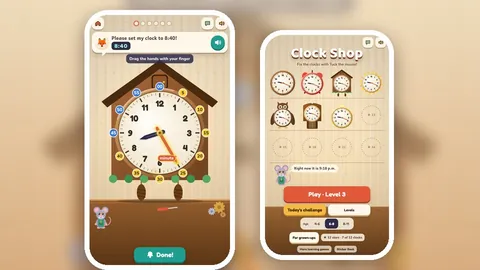
- Clock Shop: counting minutes by 5s around the clock and putting times in order from earliest to latest.
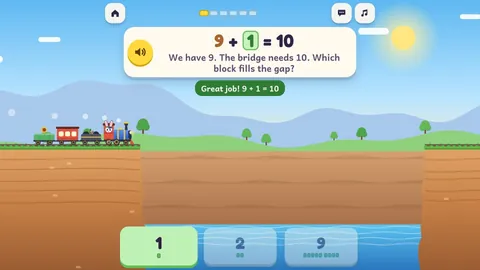
- Bond Bridges: making 100 with tens and number bonds to 100, like 64 + 36.
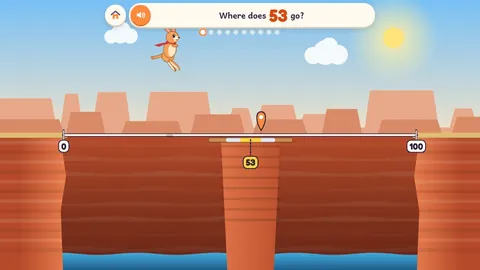
- Number Line Leap: numbers to 100 and then to 1000, rounding to the nearest ten or hundred and adding on an open number line.
- Multiply Mountain: skip counting by 2s, 5s and 10s, and building equal groups and arrays by hand before any times facts.
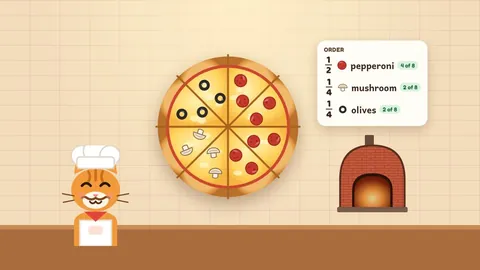
- Fraction Pizzeria: fair halves, thirds, fourths, sixths and eighths of a pizza.
How the games help
Every question is read aloud, and the answers are things to build: base ten blocks, coins in a tray, clock hands, arrays of berries. Mistakes bring a picture hint and another try, and after a second miss the answer is shown and explained, and that problem comes back again soon. Nothing is timed. Each game moves up after a run of right answers and steps back when things get hard, so a child who's ahead or behind still lands in the right place.
Tips for grown-ups
- Make change at the store. Let your child count the coins back, starting from the price and counting up.
- Read the clock by fives. Point at the minute hand and count 5, 10, 15 together until it's automatic.
- Talk through regrouping. For 46 + 27, ask "how many ones is that? Can we make a new ten?"
- Spot arrays. Egg cartons, muffin tins and window panes are all rows and columns. Count them by rows.
No ads, no accounts, no tracking
Our learning games have no ads, no accounts, no chat and no purchases, and they don't use analytics. Progress stays in the browser on your device. See 1st grade math games for review, 3rd grade math games for the next step, or all our learning games.
Questions
What math do kids learn in 2nd grade?
Place value to 1000, adding and subtracting within 100 and 1000 with regrouping, counting money, telling time to five minutes, measuring with a ruler, bar graphs, and equal groups that lead into multiplication.
Is there a game for counting money?
Yes. Coin Cafe has customers who pay with real looking US coins and bills, from counting to 20 cents up to making change, and Sumwhere Isles has a Money Market island.
How do I help my child with regrouping?
Use something they can touch. Place Value Pirates lets kids trade ten coins for a stack of ten and ten stacks for a gold bar, which is exactly what carrying and borrowing mean.
Are these games safe for my child?
Yes. No ads, no accounts, no chat, no purchases and no tracking. Progress is saved only on your device.
Do second grade math games work on a phone?
Yes. They run in the browser on phones, tablets and computers. A tablet gives the most room for dragging blocks and coins.