
Learning games / 1st Grade Math Games
1st grade math games
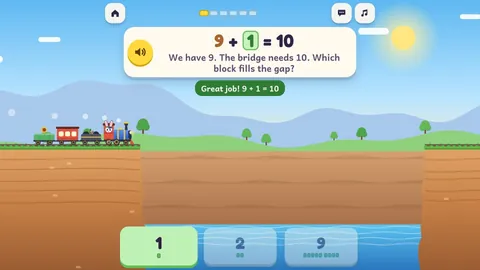
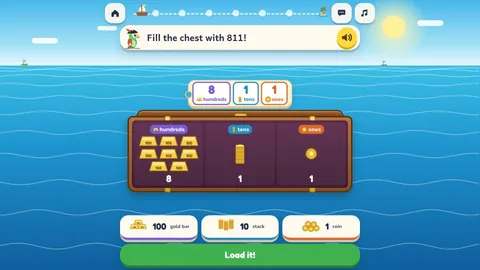
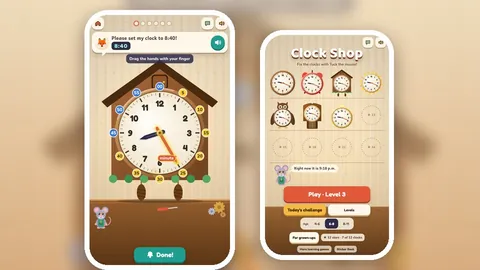
Bridges with missing planks, pirate treasure counted in tens and ones, a clock shop and a snack cafe. These games practice the math first graders learn, at their own pace, with every question read aloud.
Math games for 1st grade
Adding, place value, time and money · 9 games
What kids learn in 1st grade math
First grade is the big adding and subtracting year. Kids add and subtract within 20, and the goal is to stop counting on fingers and start using strategies: make a ten (8 + 5 is 8 + 2 + 3), doubles, and knowing that addition and subtraction are two sides of the same fact. They solve short story problems and find missing numbers, like 8 + ? = 13.
The other big idea is place value. A first grader learns that 34 means 3 tens and 4 ones, counts to 120, finds 10 more and 10 less, and compares two digit numbers. They also tell time to the hour and half hour, start on coins, split shapes into halves and fourths, and measure by lining things up.
Which game practices what
- Bond Bridges: adding and taking away within 20, the make a ten strategy with two ten frames, fact families and missing number equations. Clover the bunny's train can't cross until the planks add up.
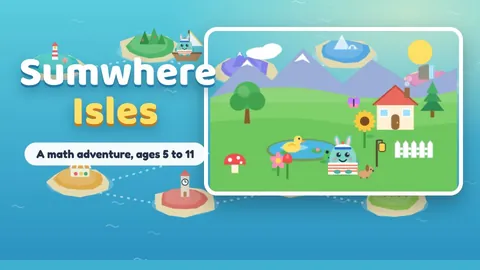
- Sumwhere Isles: Add-and-Take Forest covers adding and subtracting within 20 and story problems read aloud. Place Value Peaks has tens and ones and adding within 100, and Time Tower, Money Market and Fraction Falls cover clocks, coin values and equal parts.
- Place Value Pirates: Coin Cove and Tenpenny Isle fit first grade. Kids load treasure as tens and ones, see teen numbers as one ten and some ones, and work out 10 more and 10 less.
- Clock Shop: telling time to the hour and half hour on a clock face, then putting a loose hour hand back where it belongs.
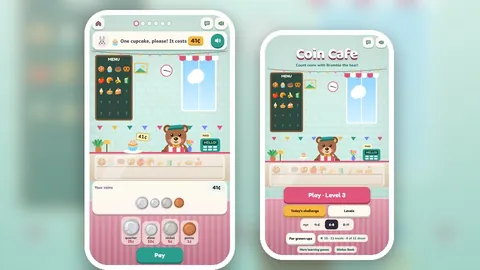
- Coin Cafe: the names and values of the penny, nickel, dime and quarter, and counting coins up to 20 cents.
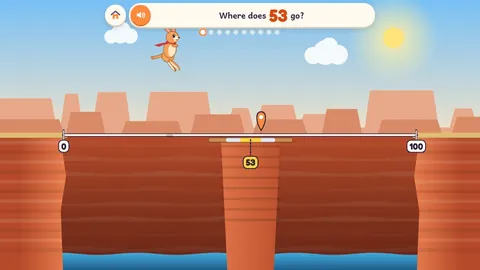
- Number Line Leap: numbers to 20 and skip counting by 2s and 5s in Sunny Gulch, then numbers to 100 in Red Rock Canyon.
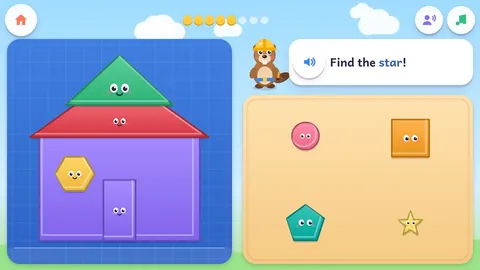
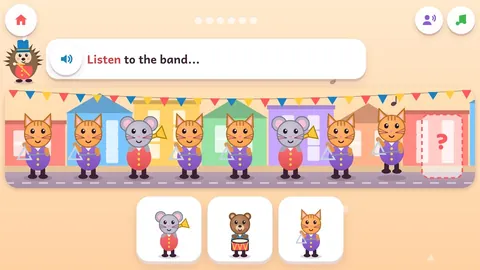
- Shape Town and Pattern Parade: turned shapes, sorting rules, halves and fourths, and growing patterns.
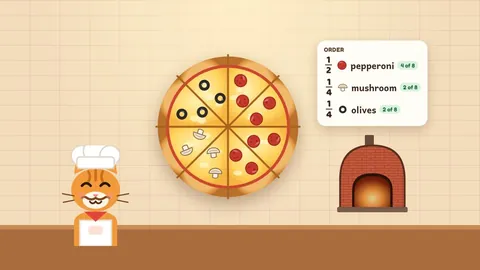
- Fraction Pizzeria: cutting pizzas into fair halves and fourths, which is where fractions begin.
How the games help
Every question is read aloud, so early readers can play on their own. Most answers are something to touch: fill ten frames, drag base ten blocks, move clock hands, drop coins in a tray. A wrong answer brings a picture hint and another try, and after a second miss the answer is shown and explained, and that fact comes back again soon. Nothing is timed. Each game also adapts, moving up after a run of right answers and easing back after misses.
Tips for grown-ups
- Practice make a ten out loud. "9 plus 4? Take 1 from the 4 to make 10, then 3 more." It's the most useful first grade strategy.
- Use real coins. Sort a handful by type, then count the dimes by tens and the nickels by fives.
- Read clocks during the day. Ask what time it is at half past, and what it will be in an hour.
- Bundle by tens. Rubber band craft sticks in groups of ten and build two digit numbers together.
No ads, no accounts, no tracking
Our learning games have no ads, no accounts, no chat and no purchases, and they don't use analytics. Progress stays in the browser on your device. Need something gentler? Try our kindergarten math games. Ready for more? See 2nd grade math games or all our learning games.
Questions
What math do kids learn in 1st grade?
Adding and subtracting within 20 with strategies like make a ten, tens and ones, counting to 120, comparing two digit numbers, telling time to the half hour, coins, and splitting shapes into halves and fourths.
How can my first grader stop counting on fingers?
Practice making 10 and the doubles until they're automatic, then use them as stepping stones. Bond Bridges is built around exactly that: it shows the make a ten move with two ten frames, then steps the counting help back as your child gets surer, and brings it back if a level gets hard.
Are these 1st grade math games safe for kids?
Yes. There are no ads, no accounts, no chat, no purchases and no tracking. Progress is stored only on your device.
What if my child finds first grade work too hard?
Sumwhere Isles starts with a short warm-up and quietly begins a grade lower if it goes badly, and every game eases back a step after misses.
Can my child play on a tablet or Chromebook?
Yes. The games run in the browser on tablets, phones, Chromebooks and computers, with nothing to install.