
Learning games / Phonics Games for Kids
Phonics games for kids
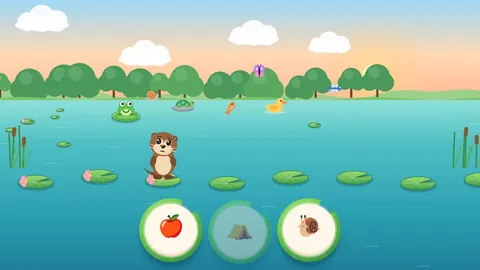
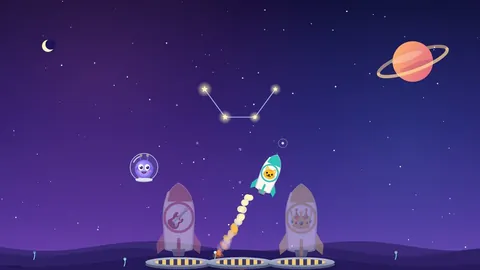
Hop an otter home by matching letter sounds, launch rockets that rhyme and bake words from letter cookies. These games follow the order most schools teach reading, and every one reads aloud so early readers can play on their own.
Sounds and letters
Ages 4 to 7 · 3 games
Reading words
Ages 5 to 8 · 2 games
Spelling patterns
Ages 7 to 10 · 1 game
The order kids learn phonics
Reading starts with listening. Before kids match letters to sounds, they learn to hear the sounds inside words: rhymes, syllables and the first sound in a word. Teachers call this phonological awareness, and it's one of the best signs that reading will come smoothly.
- Hearing sounds: rhyming, clapping syllables and finding the first sound.
- Letters and their sounds: letter names, then the most common sound for each letter.
- Blending short words: /c/ /a/ /t/ makes cat. Short a, i, o, u and e words come first.
- Two letters, one sound: sh, ch, th and ck, then blends like st, fr and nd.
- Magic e and vowel teams: silent e makes the vowel say its name, then ai, ee, igh, oa and their friends.
- Sight words: common words like the, said and was, learned until they're instant.
Which game practices what
- Phonics Pond (ages 4 to 6): letter names, letter sounds, and the first, last and middle sounds in short words.
- Rhyme Rockets (ages 4 to 7): hearing rhymes, clapping syllables, finding the word that doesn't rhyme and changing the first sound to make a new word.
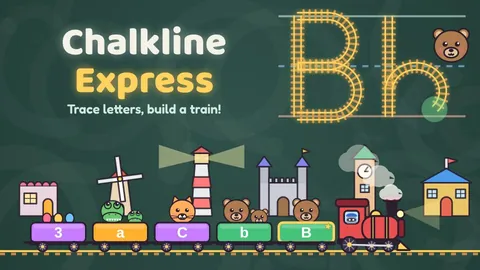
- Chalkline Express (ages 4 to 6): tracing capital and lowercase letters to lay train track, with every letter read aloud with its sound.
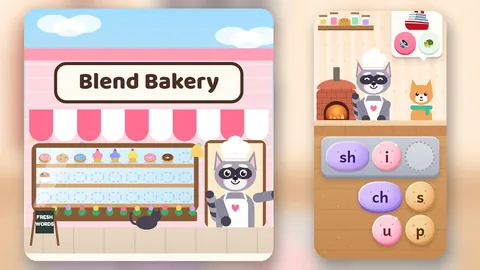
- Blend Bakery (ages 5 to 7): sounding out and spelling short vowel words, sh, ch, th and ck, blends and magic e words with letter cookies.
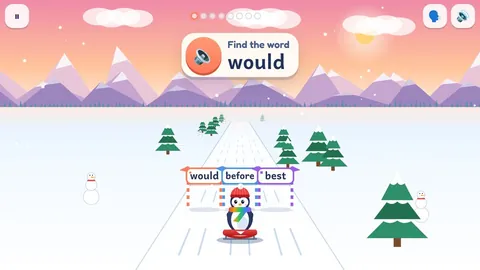
- Sight Word Slopes (ages 5 to 8): hear a common sight word and sled through the gate that shows it, from the first words kids learn up to 3rd grade.
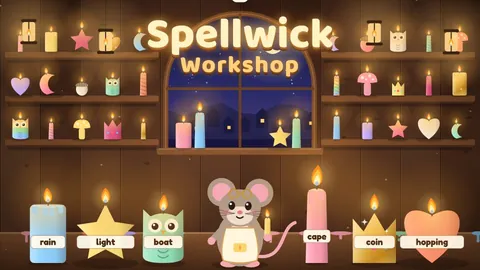
- Spellwick Workshop (ages 7 to 10): vowel teams, bossy r and the other spelling patterns that come after the basics.
Built for kids who can't read yet
Every question is spoken aloud with your device's own built-in voice, and a speaker button repeats it as often as your child likes, so a four year old can play without help. Mistakes bring a gentle hint and another try, and sounds your child finds tricky come back more often until they stick. Nothing is timed.
Tips for grown-ups
- Use pure sounds. Say /m/, not "muh." A clipped sound blends much more easily into a word.
- Play I spy with sounds. "I spy something that starts with /b/." It works in the car, too.
- Rhyme silly. Make up rhymes for names and foods. Nonsense rhymes count.
- Read together every day. Point to words as you read, and let your child sound out the short ones.
Where to go next
Once kids can sound out words, our spelling games for kids take the same patterns from reading into writing. Our learning games have no ads, no accounts, no chat and no purchases, and they don't use analytics. Progress stays in the browser on your device. See all our learning games for reading, math, science and more.
Questions
What age should kids start phonics?
Most kids start hearing rhymes and first sounds around age 4, and learn letter sounds and blending in kindergarten and 1st grade. Phonics Pond and Rhyme Rockets are made for ages 4 and up.
What is the difference between phonics and phonemic awareness?
Phonemic awareness is hearing the sounds in spoken words, with no letters involved. Phonics connects those sounds to letters. Kids need both, and Rhyme Rockets and Phonics Pond start with listening.
Can my child play these games without reading?
Yes. Every game reads aloud, so early readers and pre-readers can play on their own.
Are these phonics games free?
Yes. They're free in the browser with no ads, no purchases and nothing to download.
Are they safe for kids?
Yes. No ads, no accounts, no chat and no tracking. Progress is saved only on your device.