
Learning games / Feelings Games for Kids
Feelings games for kids
Read a critter's face, name the feeling, pick a kind way to help and practice a breathing bubble together. These gentle games give kids words for big feelings and simple tools for handling them.
Feelings and friendship game
Naming feelings, helping and calming down · 1 game
Reading about feelings
How did the character feel, and why? · 1 game
Which game practices what
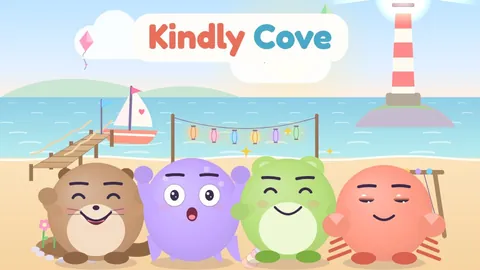
- Kindly Cove (ages 4 to 8): kids learn ten feelings, starting with happy, sad, mad and scared and growing to worried, proud, frustrated, left out and calm. They read faces and body language, think through short everyday moments like a lost toy or being new, choose a helpful action, and practice three calm-down tools: a breathing bubble, counting waves and squeeze and let go.
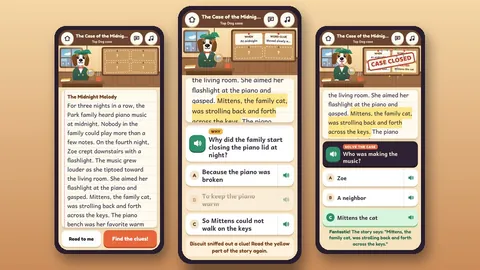
- Story Sleuth (ages 6 to 10): short mystery stories with why and how questions, including how a character felt and what made them feel that way, with the sentence that proves it.
Gentle by design
In Kindly Cove the moments are everyday ones, and nobody is ever the bad guy. Every question is read aloud, and each choice lights up as it's read, so children who can't read yet can play on their own. The game never makes a child feel guilty for stopping, and there are no streaks to keep up.
Tips for grown-ups
- Name your own feelings. "I'm frustrated the car won't start. I'm going to take a big breath." Kids learn by hearing it.
- Check in at dinner. Ask everyone for one feeling from the day and what caused it.
- Practice calm when it's calm. Try the breathing bubble together on a good day, so it's ready on a hard one.
- Ask about characters. While reading a book, ask how a character feels and how they can tell.
No ads, no accounts, no tracking
Our learning games have no ads, no accounts, no chat and no purchases, and they don't use analytics. Progress stays in the browser on your device. For more, see our music games for kids, our phonics games or all our learning games.
Questions
What are social emotional learning games?
Games that help kids name feelings, understand how others feel, handle big emotions and make kind choices. Kindly Cove practices all four with gentle everyday moments.
What age is Kindly Cove for?
Ages 4 to 8, roughly preschool to 2nd grade. Everything is read aloud, so pre-readers can play.
Can a game replace help from a counselor?
No. These games are everyday practice, not therapy. If you're worried about your child's feelings or behavior, talk with their teacher, school counselor or doctor.
Are these feelings games free?
Yes. They're free in the browser with no ads, no purchases and nothing to download.
Are they safe for kids?
Yes. No ads, no accounts, no chat and no tracking. Progress is saved only on your device.