Games / Guides / Strategy articles / Cribbage pegging strategy
Cribbage pegging strategy: leads, traps and the go
Hands and the crib get most of the attention, but a good pegger picks up several points a deal that a careless one gives away. Over a game to 121, that's often the difference. Here's how we think about every card during the play.
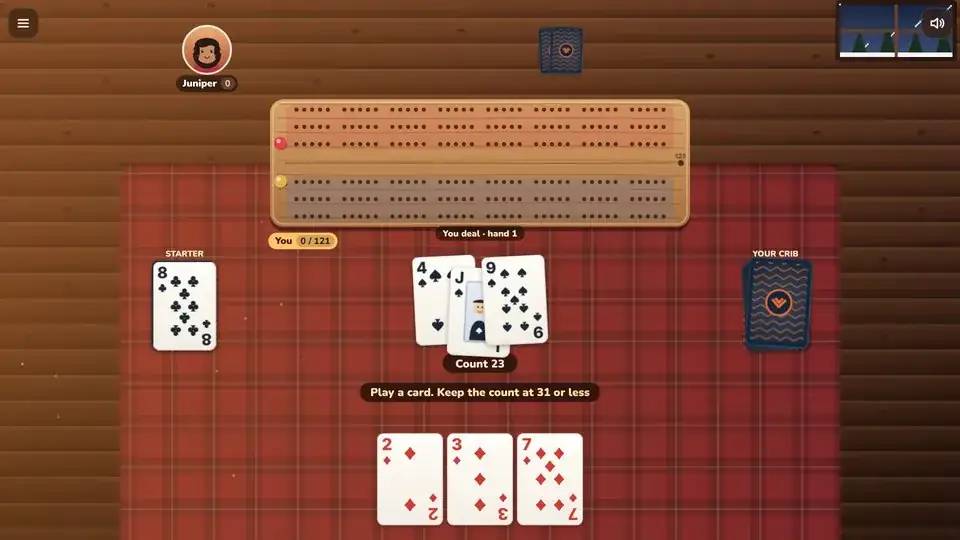
What scores during the play
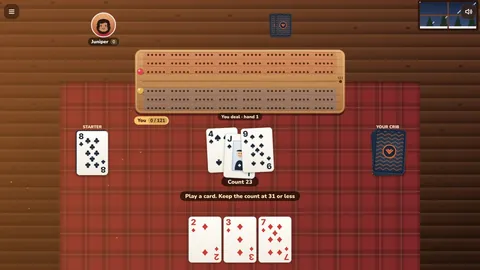
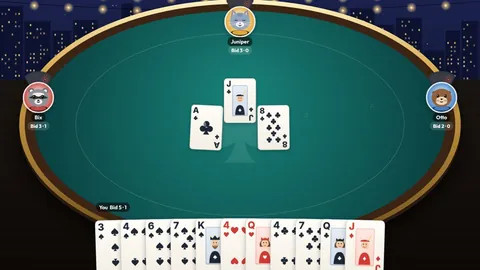
A quick reminder. Cards are played alternately and the count can't pass 31. Making the count exactly 15 or 31 scores 2. Pairing the card just played scores 2, three of a kind 6 and four of a kind 12. A run of three or more among the last cards played scores 1 per card, in any order. When neither player can play, the last one to lay a card scores 1 for the go, and the last card of the hand always scores 1.
Ten-value cards (10, J, Q, K) make up 16 of the 52 cards. That one fact drives most of what follows.
Leading: the first card matters
- Lead a 4 or lower if you can. Your opponent can't make 15 with one card, since that would need an 11 or more.
- Never lead a 5 unless you have no choice. Any of the 16 ten-cards makes 15 straight away.
- A ten-card lead invites a 5. The count becomes 10, and a 5 scores 15 for 2. Avoid it when you hold other options, especially if you're short of 5s yourself.
- Leading from a pair is a classic trap. If you hold two 3s and lead one, your opponent may pair it for 2, and you answer with the third 3 for a pair royal and 6.
When you have two good leads, prefer the one that keeps your hand flexible. A low card you hold back is worth a lot later, when the count climbs toward 31.
Counts to stay away from
| Count after your card | Why it's risky |
|---|---|
| 5 | Any ten-card makes 15. |
| 21 | Any ten-card makes 31. |
| 11 or so | A 4 makes 15, and you can't always see it coming. |
| Just under 15 with a known rank out | If they've shown a card that fits, expect it. |
The two to remember are 5 and 21. Both give your opponent 2 points with any of 16 cards. Leaving the count at 21 is the mistake we see most from new players in Airscape Cribbage.
Pairs: when to pair and when not to
Pairing your opponent's card scores 2, but it gives them a chance at three of a kind for 6. Pair when the risk is low, which mostly means one of these:
- You hold another card of that rank. If they answer with three of a kind for 6, you play the fourth for 12.
- Enough of that rank has already been seen that a third one is unlikely in their hand.
- The count is high enough that a third card would push it past 31.
Late in a game when you're behind, pairing is worth the risk more often, because you need points. When you're ahead and close to 121, play it safe.
Runs: playing on and playing off
When you play a card close in rank to your opponent's (one or two apart), you're playing on: you open the door to a run. When you play a card far away in rank, you're playing off. Here's what playing on can do, both ways.
| Card | Count | Points |
|---|---|---|
| They lead 7 | 7 | |
| You play 8 | 15 | You score 2 for fifteen |
| They play 6 | 21 | They score 3 for the run 6, 7, 8 |
| You play 9 | 30 | You score 4 for the run 6, 7, 8, 9 |
| They can't play | 30 | You score 1 for the go |
Playing the 8 was right here because you held the 9 to extend any run they made. Without it, the 8 still scores 15 for 2, but it also hands them a run for 3. The rule: play on when you can extend the run that you're inviting, and play off when you can't.
Winning the go
Near 31, low cards are gold. If the count is 27 and you still hold an Ace and a 3, you may get to play both, pick up the go and maybe a 31. So when you choose your cards early in the play, think about which ones you want to keep for the end of a count.
- Save a low card (Ace to 4) for late in a count when you can.
- If you hold a low pair late, playing one can sometimes get you a pair for 2 as well as the go.
- When you're the dealer you play second, which often lets you take the last card of a count. Use it.
Pegging and the discard work together
Your discard to the crib decides what you have to peg with. Two hands that count the same can peg very differently. A hand of 7, 8, 8, 9 counts well and also pegs well, because you can extend runs and make 15s. A hand of four ten-cards can't make 15 for you and leaves you leading into 5s. When two discards are close in hand value, keep the one with more low cards and more connected cards.
Cribbage Cabin's hint shows your best keeps with their average hand value over every starter, which tells you when two choices are close enough that pegging should decide.
Reading your opponent
Every card played and every go said tells you something. If your opponent says go at a count of 24, they have no 7 or lower left, so leading low into the next count is safe. If they played a 5 early, they may have kept 5s together with ten-cards in their hand. Wren, our expert rival, works out what you could be holding from exactly this kind of information, and you can do the same at a simpler level.
Pegging near the end of a game
The non-dealer counts first after the play, so near 121 the non-dealer may win before the dealer counts at all. If you're the dealer and your opponent needs only a few points, pegging is your last chance to stop them: play off, avoid 15s and 31s you can't answer, and grab the go when you can. If you're the one close to home, take any safe points the play offers.
Mistakes that give away points
- Leading a 5, or leaving the count at 5 or 21.
- Pairing with no protection when ahead.
- Playing on into a run you can't extend.
- Spending all your low cards early.
- Forgetting what a go told you about their hand.
For the full rules and how to count a hand, read our Cribbage Cabin guide. For another two-player card game where reading your opponent matters, see our gin rummy strategy.
Questions
What is the best lead in cribbage?
A 4 or lower, because your opponent can't make 15 with one card. Leading from a pair can also set a trap for a pair royal.
Why should you never lead a 5 in cribbage?
Because any of the 16 ten-value cards makes 15 for your opponent straight away.
What count should you avoid in cribbage pegging?
5 and 21. From either one, any ten-value card scores 2 for your opponent.
How do runs work in pegging?
The last three or more cards played score a run if they form a sequence in any order, like 6, 8, 7. Each card in the run is worth 1.