
Games / Puzzle Games / Codebloom / Guide
How to play Codebloom
A row of flowers is hidden in the garden. Guess it, read the clues and close in on the answer. Codebloom is the classic color code breaking puzzle, with four levels, a hint that never cheats, and a Daily Code that is the same for everyone.
This is our guide to playing Codebloom. Want to jump straight in? Play Codebloom right here in your browser.
Missing something you need? Tell us.
Quick answers
Do I need an account to play Codebloom?
No. Just open it and play, with no sign-up. If you like, a free account (username only, no email, for players 13 and older) puts your scores on the leaderboards and backs up your progress so it follows you to any device.
Does Codebloom save my progress?
Yes. It saves on this device on its own, so you can close the page and pick up where you left off. Sign in with a free account to keep the same progress on your phone and your computer.
Is Codebloom OK for kids?
Yes, players of any age can enjoy it. There is no chat and no way to message other players, and nobody needs an account to play. Accounts are for players 13 and older, so younger players just play and their progress stays on their device. For ages 4 to 11 we also have learning games in their own kids area, with no ads, no accounts and no tracking.
What is Codebloom?
Codebloom is a code breaker, the logic puzzle where one side hides a row of colors and the other side has a limited number of guesses to find it. After each guess you get clues about how close you were, and every clue rules out a whole set of possible answers. It's a game of deduction, not luck: with good guesses a Classic code can always be cracked in a handful of tries.
Ours hides its code in a little flower bed. It's free in your browser on a phone, tablet or computer, and every flower also has its own symbol in the middle, so the colors are easy to tell apart.
How to play
- Tap flowers to fill your guess, one spot at a time from left to right.
- Tap a flower you placed to take it back, or use Erase.
- Tap Check to see your clues.
- Keep guessing until the whole row matches, before you run out of rows.
Reading the clues
Next to each guess you get a few small markers.
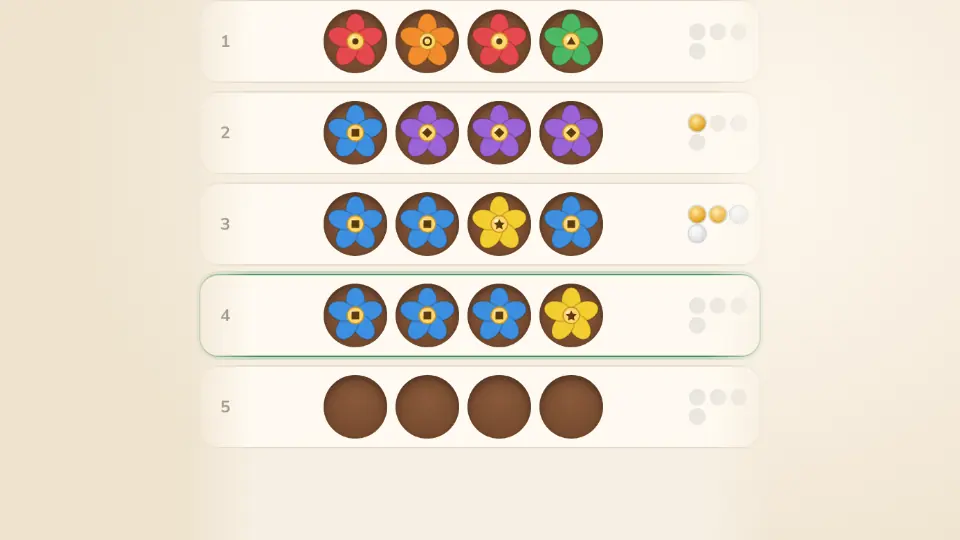
- A gold bee: one of your flowers is the right color in the right spot.
- A white moth: one of your flowers is the right color, but it's in the wrong spot.
- An empty dot: one of your flowers isn't in the code at all (or you have more of that color than the code does).
The clues never say which flower they belong to. If you guess red, red, blue, yellow and get one bee and one moth, any of those four could be the bee. Working out which one is the whole puzzle.
Levels
| Level | Flowers | Colors | Repeats | Guesses |
|---|---|---|---|---|
| Seedling | 4 | 6 | No | 12 |
| Classic | 4 | 6 | Yes | 10 |
| Greenhouse | 5 | 8 | Yes | 12 |
| Botanist | 6 | 8 | Yes | 12 |
Seedling is the gentlest place to learn: every flower in the code is a different color. From Classic on, the same color can appear more than once, which makes the clues trickier to read.
Hints and helpers
Hint fills in a guess that fits every clue you've seen so far. It never peeks at the answer; it just shows a code that is still possible, and you can change it before you check. Each hint takes a little off your score.
Under Settings you can show how many codes still fit your clues (it counts down as you narrow things down), and turn on a warning when a guess you're about to check breaks one of your own clues.
Daily Code and stats
The Daily Code is a Classic code that is the same for everyone each day. Fewer guesses and a quicker solve score more, and your first finished code goes on the daily leaderboard. You can share your result as a little grid of bees and moths without giving the answer away. Stats keep your win count, average guesses and best streak for every level.
Strategy tips
- Start with two colors in pairs, like red red blue blue. The clues tell you a lot about both colors at once.
- Change one or two flowers at a time between guesses, so you can tell which change made the difference.
- A guess with zero bees and zero moths is great news: every color in it is gone.
- Use the count of codes that still fit. If it drops to a few, think about which guess splits them best.
- In Seedling there are no repeats, so once you know four colors are in the code it's only about their order.
Questions
Is Codebloom free?
Yes. It's free in your browser with nothing to download.
What do the bee and the moth mean?
A gold bee is a right color in the right spot. A white moth is a right color in the wrong spot.
Can colors repeat in the code?
In Seedling, no. In Classic, Greenhouse and Botanist, yes, a color can appear more than once.
How many guesses does it take?
With careful guesses a Classic code usually takes four to six. The fewest is one, if you're very lucky.
Is there a daily code breaker?
Yes. The Daily Code is the same for everyone each day, with a leaderboard and a shareable result.
Can I play Codebloom on my phone?
Yes. Codebloom runs in your browser on a phone, tablet or computer, with nothing to install and no sign up. Your progress saves on your device, and a free account keeps it on every device.
What other free puzzle games are like Codebloom?
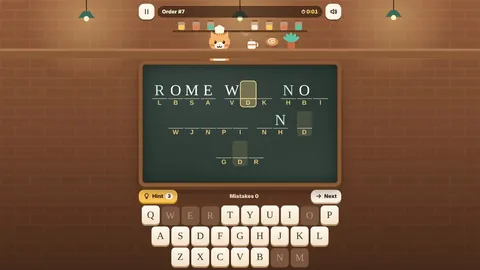
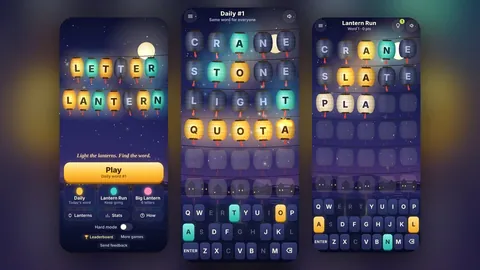
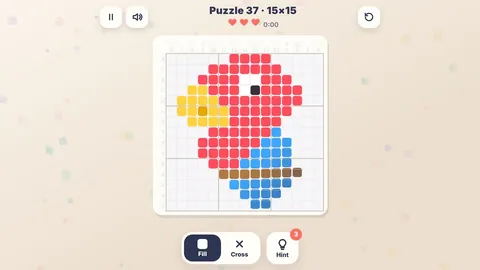
If you enjoy Codebloom, try Cipher Cafe (cryptogram puzzle), Letter Lantern (five letter word game) and Mosaic Logic (picture logic puzzle). They're all free in your browser too, and the Puzzle Games page lists every one.
Related guides
 How to play Cipher CafeCryptogram
 How to play Letter LanternDaily word
 How to play Mosaic LogicPicture logic
 How to play Ninebark SudokuSudoku
 How to play Pebble PuttMini golf
More to read
How to solve cryptograms: a full worked exampleStrategy article · Cipher CafeDaily word puzzle strategy: solve it in fewer guessesStrategy article · Letter LanternHow to solve nonograms: a worked 5x5 and the harder tricksStrategy article · Mosaic LogicLogic PuzzlesRules, tips and games like this Brain GamesRules, tips and games like this